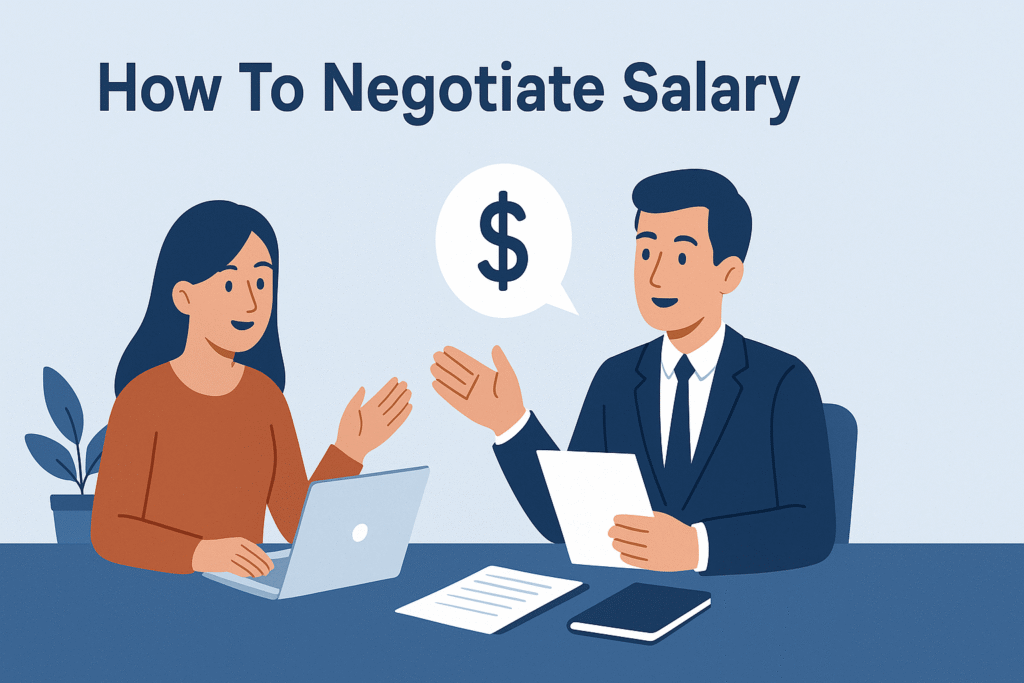
How to Negotiate Salary as a Graduate Without Prior Work Experience: 12 Proven Strategies to Increase Your Starting Pay
Landing your first full-time job after graduation is a major milestone. After months of applications, interviews, and assessments, receiving an offer can feel like crossing the finish line.
But there’s one important step many graduates overlook: salary negotiation.
A surprising number of graduates accept the first offer they receive because they assume they have no bargaining power. After all, how can you negotiate when you don’t have years of professional experience?
The truth is that employers often expect candidates to negotiate. Research and career experts consistently emphasize that preparation, market research, and confidence matter far more than years of experience when discussing compensation.
The key is understanding that you are not negotiating based on years worked. You are negotiating based on the value you can bring to the organization.
In this guide, you’ll learn exactly how to negotiate salary as a graduate without prior work experience, what mistakes to avoid, and how to confidently discuss compensation without jeopardizing your job offer.

Why Salary Negotiation for Graduates Matters
Many graduates assume that salary negotiation only becomes important later in their careers.
That assumption can be costly.
Your starting salary influences future raises, bonuses, and earning potential throughout your career. Career experts consistently note that negotiating early can have a significant long-term impact on lifetime earnings.
Negotiating your first salary can help you:
- Increase your starting income
- Establish professional confidence
- Improve future salary growth
- Secure better benefits
- Demonstrate communication skills
Remember: negotiating respectfully is not being demanding. It is a standard part of the hiring process.
How to Negotiate Salary as a Graduate Without Prior Work Experience
The biggest misconception among graduates is believing they need professional experience before they can negotiate.
Employers don’t hire graduates because they have extensive experience. They hire them because of their potential.
Here are the strategies that work.
Salary Negotiation for Graduates Starts With Market Research
Before discussing compensation, you need to understand what similar roles pay.
Without research, you risk:
- Asking for too little
- Asking for too much
- Losing confidence during negotiations
Reliable salary data can be found through resources such as the https://www.bls.gov/oes/earnings.htm U.S. Bureau of Labor Statistics, Indeed, LinkedIn Salary, and industry salary guides.
Research these factors:
- Job title
- Industry
- Geographic location
- Company size
- Required qualifications
- Current market demand
Salary Research Checklist
| Factor | Why It Matters |
|---|---|
| Location | Salaries vary significantly by city and region |
| Industry | Technology, finance, and healthcare often pay more |
| Company Size | Larger firms may offer higher compensation |
| Skills Required | Specialized skills increase value |
| Education Level | Advanced degrees may justify higher pay |
When negotiating, use salary ranges rather than a single number.
For example:
Instead of: “I want $45,000.”
Say: “Based on my research, similar graduate positions in this market typically range between $45,000 and $50,000.”
How to Negotiate Salary as a Graduate Without Prior Work Experience by Highlighting Your Value
You may not have full-time experience, but you likely have relevant achievements.
Employers value evidence that you can contribute.
Consider:
- Internships
- Volunteer projects
- Academic projects
- Leadership positions
- Certifications
- Freelance work
- Campus organizations
Examples of Valuable Graduate Experience
- Led a student organization
- Completed a capstone project
- Managed event planning activities
- Built software applications
- Conducted research projects
- Achieved academic awards
Frame these experiences around measurable results.
Instead of saying:
“I completed an internship.”
Say:
“During my internship, I helped streamline reporting processes that reduced preparation time by 20%.”
Results make a stronger case than responsibilities.
Salary Negotiation for Graduates Requires Understanding Your Total Compensation
Many graduates focus only on base salary.
Smart negotiators look at the entire package.
A compensation package may include:
- Performance bonuses
- Signing bonuses
- Health insurance
- Retirement contributions
- Remote work flexibility
- Professional development funding
- Additional vacation days
- Tuition assistance
Career experts frequently recommend evaluating benefits alongside salary because these elements can significantly increase the total value of an offer.
Example Compensation Comparison
| Component | Offer A | Offer B |
|---|---|---|
| Base Salary | $48,000 | $45,000 |
| Bonus | $0 | $3,000 |
| Vacation Days | 10 | 20 |
| Remote Work | No | Yes |
| Training Budget | $0 | $2,000 |
In many cases, the lower salary may actually be the stronger offer.
How to Negotiate Salary as a Graduate Without Prior Work Experience With Confidence
Confidence matters.
Employers often assess how candidates communicate during negotiations.
The goal is to sound professional and collaborative.
Effective Negotiation Script
“Thank you for the offer. I’m very excited about the opportunity and the chance to contribute to your team. Based on my research and the value I believe I can bring, I was hoping we could discuss a salary closer to $50,000. Is there flexibility within the compensation range?”
This approach works because it:
- Shows enthusiasm
- Demonstrates preparation
- Remains respectful
- Opens discussion rather than making demands
Entry Level Salary Negotiation Mistakes to Avoid
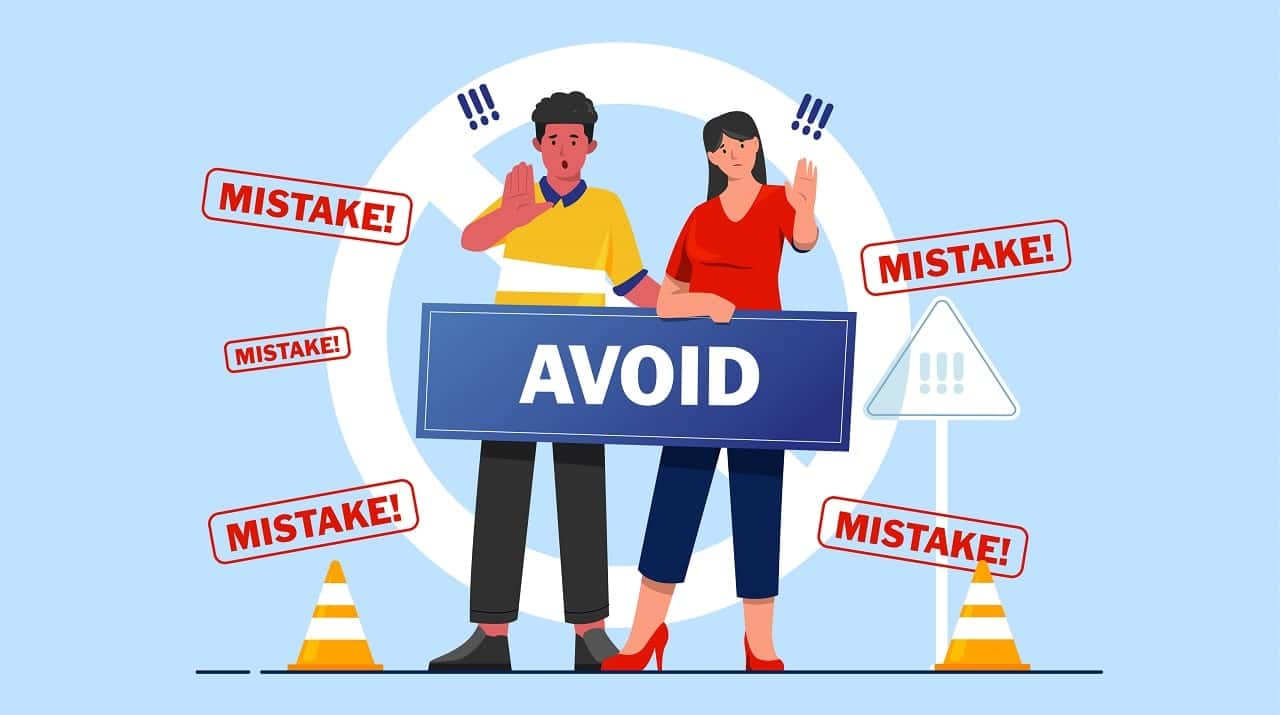
Many graduates unintentionally weaken their negotiating position.
Avoid these common mistakes.
1. Negotiating Too Early
Do not discuss salary before receiving an offer unless specifically asked.
Wait until the employer has decided they want to hire you.
2. Accepting Immediately
Even if you’re happy with the offer, take time to review it.
A thoughtful response demonstrates professionalism.
3. Apologizing for Negotiating
Avoid phrases like:
- “I’m sorry to ask…”
- “This may be unreasonable…”
- “I know I don’t deserve more…”
Confidence matters.
4. Making Emotional Arguments
Avoid:
- Student loans
- Rent costs
- Personal expenses
Focus on market value and professional contributions instead.
5. Being Aggressive
Negotiation should feel like collaboration, not confrontation.
How to Negotiate Salary as a Graduate Without Prior Work Experience Using Academic Achievements
Many graduates underestimate the value of academic accomplishments.
Employers often hire graduates specifically because of their educational background.
Highlight:
- High GPA
- Research experience
- Honors programs
- Specialized coursework
- Industry certifications
- Competition awards
Example
“My coursework included advanced data analytics and machine learning projects that align closely with the responsibilities outlined for this position.”
This demonstrates relevance and preparedness.
Graduate Salary Negotiation Strategies That Employers Respect
Employers respond best when candidates are informed and professional.
Here are proven approaches.
Use Data
Support your request with research.
Be Specific
Request a reasonable salary range.
Stay Flexible
Consider alternative compensation.
Focus on Value
Emphasize contributions rather than personal needs.
Maintain Professionalism
Keep discussions positive throughout the process.
How to Respond When an Employer Says No
Not every negotiation results in a higher salary.
That doesn’t mean the conversation is over.
Experts recommend asking thoughtful follow-up questions to understand future opportunities.
Consider asking:
- What factors determine compensation for this role?
- When is the next salary review?
- What performance milestones would justify a salary increase?
These questions demonstrate maturity and long-term thinking.
Salary Negotiation for Graduates: Email Template
Sample Negotiation Email
Subject: Discussion Regarding Offer
Dear Hiring Manager,
Thank you for extending the offer for the Graduate Marketing Associate position. I am excited about the opportunity to join your team and contribute to the company’s goals.
After reviewing the offer and researching comparable roles within the industry and location, I would like to discuss the possibility of adjusting the salary to $50,000.
I believe my academic background, internship experience, and project work have equipped me with skills that will allow me to contribute effectively from day one.
I appreciate your consideration and look forward to discussing this further.
Kind regards,
Your Name
How to Negotiate Salary as a Graduate Without Prior Work Experience in Competitive Job Markets
Some industries are more competitive than others.
In these situations:
- Focus on skills
- Emphasize adaptability
- Showcase technical abilities
- Demonstrate willingness to learn
Employers understand graduates lack extensive experience.
What they want is evidence of potential.
Potential is often your strongest negotiating asset.
The Best Time to Negotiate a Graduate Salary Offer

Timing matters.
Negotiate After:
✅ Receiving a formal offer
Avoid Negotiating During:
❌ Initial application
❌ Early screening interviews
❌ Before understanding the role
The strongest negotiating position occurs after the employer has decided they want you.
Conclusion: How to Negotiate Salary as a Graduate Without Prior Work Experience Successfully
Negotiating your first salary can feel intimidating, especially when you’re entering the workforce without years of professional experience.
However, salary negotiation is not about proving you’ve worked longer than everyone else. It’s about demonstrating your value, understanding market rates, and communicating confidently.
Employers expect well-prepared candidates to ask questions and discuss compensation professionally. By researching salary benchmarks, highlighting transferable achievements, evaluating the entire compensation package, and approaching discussions with confidence, you can significantly improve your chances of securing a better offer.
The most important thing to remember is simple: lack of experience does not mean lack of value.
Every professional starts somewhere, and your first salary negotiation is an opportunity to establish the confidence and communication skills that will benefit you throughout your career.