Introduction: Short Certification vs Full Degree — Why the Debate Matters in 2026
If you were to walk into virtually any modern workplace today and ask professionals what matters most for career success, you’d hear a familiar theme: skills and impact, not labels. Yet traditional thinking still elevates the full degree above all, while newcomers champion short certifications as the fastest ticket to employment.
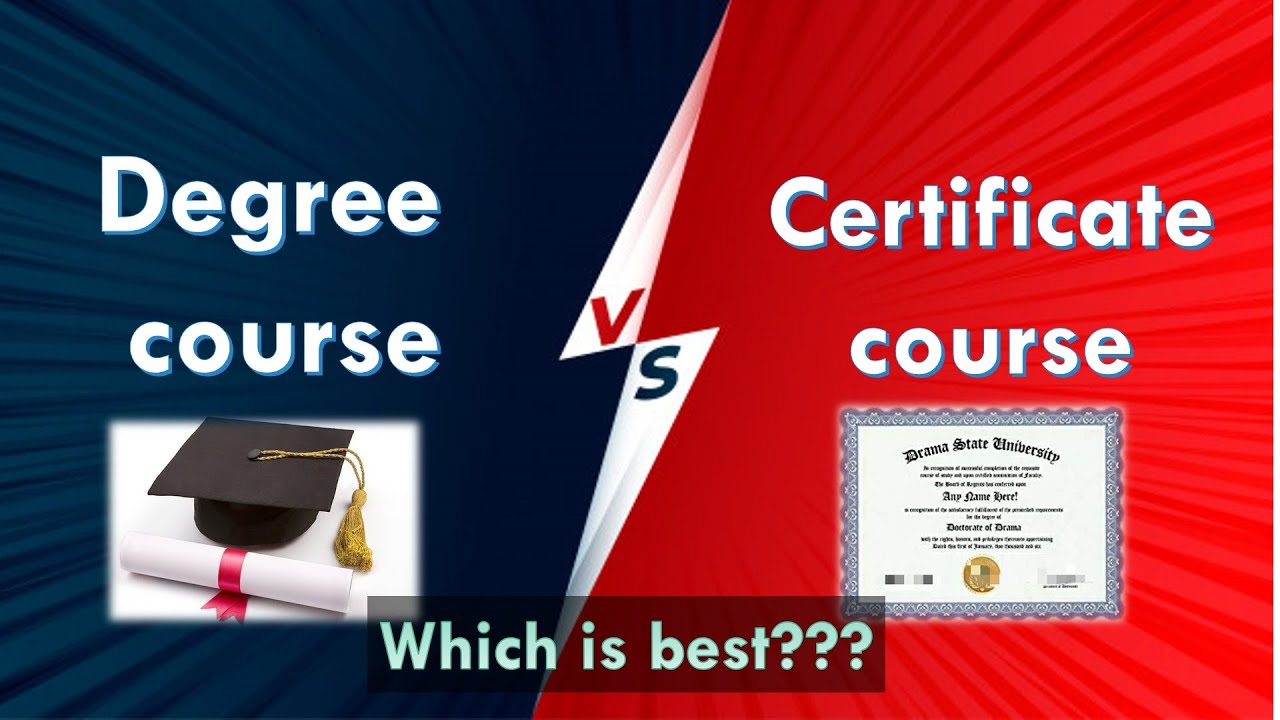
In 2026, the conversation is different. Learners, employers, and career strategists are increasingly asking a nuanced question: “Short certification vs full degree which one actually wins in terms of time, cost, employability, and long‑term career value?”
This article seeks to answer that in a clear, balanced, and actionable way — tracing what research shows, juxtaposing costs, exploring employer priorities, and offering real recommendations for anyone planning their future.
 How to Monetize Your Skill While You’re Still a Student in 2026 (Proven Strategies That Work)
Short Certification vs Full Degree in 2026: What’s the Difference?
Before comparing outcomes, it helps to understand what we mean by short certification and full degree.
Short Certification
A short certification is typically:
-
Skill‑focused
-
Shorter in duration (weeks to months)
-
Often offered online or as blended learning
-
Career‑specific rather than broad academic foundations
Examples include tech certifications (e.g., cloud, cybersecurity), professional credentials (e.g., HR, project management), and trade‑focused certificates.
Full Degree
A full degree refers to undergraduate or postgraduate academic credentials:
-
Bachelor’s degrees (3–4 years)
-
Master’s degrees (1–2 years)
-
Doctorates (3+ years)
These confer deep academic knowledge, general thinking skills, and are widely recognized across industries.
The core difference isn’t just time, it’s scope: degrees emphasize foundational education and theory, whereas certifications focus on applied, job‑ready skills.
Why Short Certification vs Full Degree Matters in 2026
Fast‑moving industries, digital disruptions, and evolving job roles have made skill agility more important than ever. Today’s world demands that learners not only accumulate knowledge but also apply it instantly. This shift has led to rising relevance for certifications that are:
-
Cost‑effective
-
Quick to earn
-
Directly tied to specific competencies
At the same time, degrees continue to hold traditional value, often associated with long‑term career stability and broader opportunity sets.
But the question remains: Which one actually delivers more career value?
To delve into this, let’s examine real factors that matter to students, professionals, and employers alike.
Cost and Time Investment: Certification vs Degree
One of the most striking differences between short certification vs full degree is the investment required — in time and money.
| Category | Short Certification | Full Degree |
|---|---|---|
| Average Duration | Weeks to 6 months | 3–5 years (Bachelor’s) |
| Typical Cost | $200–$5,000 | $15,000–$200,000+ |
| Time to Job Focus | Fast (weeks) | Long (years) |
| Flexibility | High | Moderate to Low |
| Long‑Term Depth | Medium | Very High |
| Renewal / Updates | Frequent | Less frequent |
This table highlights why many learners today start with certifications — they are far more accessible and often tailored to immediate employer needs.
However, caution is needed: cost varies widely, and a certification is not always cheap — but the time‑to‑value ratio is often higher than for a degree.
Earning Potential: Certification vs Degree in 2026
Another key consideration is the earning return on investment (ROI).
Traditional data from long‑term labour studies illustrates this clearly: on average, degree holders earn more over a lifetime than non‑degree workers. Yet this doesn’t mean short certifications are not lucrative.
Research into wage outcomes consistently shows that skills in high demand like cloud computing, cybersecurity, data analysis, and healthcare tech can command competitive salaries even without a full degree.
In fact, in fast‑emerging fields, certifications are sometimes more valuable than a general degree because they signal specific job competency.
For example, a certified cloud practitioner or certified ethical hacker often earns starting salaries comparable to many entry‑level degree positions in traditional industries.
Employer Perspectives: What Matters More in 2026
If you ask employers what they value, you’ll hear one thing very clearly: skills first, credentials second.
A definitive global labour outlook of evolving work trends highlights a shift toward skills‑based hiring and recognition of microcredentials as valid proof of competency. (For broader insight see this referenced global talent visa programmes guide.)
https://www.weforum.org/agenda/2024/01/global-talent-visa-programs-explained
This doesn’t mean degrees are obsolete rather, it means employers increasingly recognize that:
-
Certifications demonstrate current job‑ready skills
-
Degrees indicate broad critical thinking and knowledge depth
So the real winner is often the person who can combine both foundational education and specific certifications to create a competitive, job‑ready profile.
Short Certification vs Full Degree: Industry‑by‑Industry Reality
Let’s break down how different sectors value certifications vs degrees in 2026.
Tech and IT
-
Certifications often equal or exceed degree value
-
Short‑term certificates in cloud (AWS, Azure), cybersecurity, and AI are widely accepted
Healthcare
-
Degrees remain essential (especially for clinical roles)
-
Certifications support continuing education and specializations
Business and Management
-
Degrees are standard for leadership roles
-
Certifications (PMP, Six Sigma) enhance credibility
Creative Industries
-
Portfolios often matter more than formal degrees
-
Certifications demonstrate tool‑specific agility (e.g., Adobe, UX courses)
Short Certification vs Full Degree: Flexibility & Lifelong Learning
The modern career arc rarely follows a single straight line.
Certifications are valuable because they:
-
Allow quick upskilling
-
Support career switching
-
Keep you updated in specialized areas
Degrees, in contrast, are valuable because they:
-
Provide structured knowledge
-
Open doors to advanced roles
-
Are widely recognized globally
In 2026, a blended strategy is often the most effective: use short certifications to stay agile, and use degrees to solidify foundational knowledge.
Table: When to Choose Certification vs Degree
| Scenario | Choose Short Certification | Choose Full Degree |
|---|---|---|
| You want to enter the workforce fast | ✔️ | ❌ |
| You need specialized skills for tech jobs | ✔️ | ⚠️ (supporting) |
| You aim for research or academia | ❌ | ✔️ |
| You want broad career mobility | ⚠️ | ✔️ |
| You need affordable, fast ROI | ✔️ | ❌ |
| You want advanced career leadership | ⚠️ | ✔️ |
Success Stories: How Smart Learners Combine Both
Many learners in 2026 are no longer choosing one or the other they combine both thoughtfully.
Example 1: Software Developer
-
Degree in Computer Science
-
Certifications in AWS and Cybersecurity
-
Result: Higher salary + job mobility
Example 2: Digital Marketer
-
Short certifications in SEO, analytics, social media
-
No degree initially
-
Builds freelance income — later pursues part‑time business degree
Example 3: Project Manager
-
Bachelor’s in Business
-
PMP certification
-
Increased leadership opportunities
How to Decide: Should You Get a Certification or Degree in 2026?
Here are smart questions to guide your choice:
1. What are your career goals?
-
Leadership/Research? Degree likely
-
Fast entry into workforce? Certification likely
2. How much time and money can you invest?
-
Short certifications are quicker and cheaper
-
Degrees require more time and financial commitment
3. What does the industry you want to enter value most?
-
Tech? Certification weighs heavily
-
Healthcare/Education? Degrees are often necessary
4. Are you open to blending credentials?
If yes, you can learn fast and grow deep.
Avoiding Common Mistakes When Choosing
Mistake 1: Choosing Based on Cost Alone
Money matters, but relevance matters more.
Mistake 2: Ignoring Real Job Data
Look at job postings, not just marketing pages.
Mistake 3: Assuming One Path Fits All
Your context, goals, and industry should shape your choice.
Future Trends: How Education Pathways Are Evolving
Industry leaders predict a skills‑based economy where:
-
Microcredentials and portable certificates gain legitimacy
-
Hybrid credentials (cert + degree) become standard
-
Employers adopt skills verification over title verification
This trend is already visible in major workforce reports that highlight credential diversification as a core career shift in the next decade (renewed workforce insights can be found in this skills‑based hiring resource).
https://www.bls.gov/careeroutlook
Conclusion: Short Certification vs Full Degree — Which Wins in 2026?
If you ask graduates in 2026 which path “wins,” the answer isn’t absolute. Instead, it depends on your:
-
Career goals
-
Industry demands
-
Time & financial resources
-
Learning style
Short certifications win in speed, flexibility, and cost‑effectiveness. Degrees win in depth, recognition, and broad opportunity.
But the real winner is often the learner who blends both intelligently using certificates to accelerate entry into work and degrees to build long‑term upward mobility.